



u003ch2u003eSummaryu003c/h2u003ernMid-sized financial services institutions (FIs) are facing significant challenges during this period of rapid technological change, particularly with the rise of artificial intelligence (AI). As customer expectations grow, smaller banks and lenders must stay competitive and responsive. u003ca href=u0022#compete-ai-landscapeu0022u003eCanada’s largest financial institutions are already advancing in AIu003c/au003e, while many others remain in ‘observer’ mode, hesitant to invest and experiment. Yet, mid-sized FIs that adopt the right strategy have unique agility, allowing them to adapt swiftly and efficiently to technological disruptions—even more so than their larger counterparts.rnrnThis report explores how AI can tackle these challenges by transforming operations and generating substantial value across departments and business lines. We present a detailed approach for identifying, prioritizing, and implementing AI use cases, empowering mid-sized financial institutions to maintain a competitive edge in the fast-changing financial industry.rnrnu003cstrongu003eAI offers a major opportunity to enhance productivity, personalize customer interactions, improve decision-making, and create new business models. Successful AI integration requires a balanced, strategic approach that aligns with business goals and carefully evaluates potential risks.u003c/strongu003e
Several challenges facing mid-sized financial services companies
In a time of rapid technological advancements and changing market conditions, mid-sized financial services companies are at a crossroads. They must meet rising customer expectations and deal with growing competition, presenting them with unique challenges that can either hinder their growth or drive them to seek new opportunities. Here are the top four challenges in this area:
Rising Customer Expectations
Today’s customers seek personalized, responsive, and holistic banking and borrowing experiences tailored to their individual preferences and needs. 72% of customers now view personalization as a critical factor in their interactions with financial institutions.u003ca href=u0022https://www.zendesk.com/blog/customer-experience-in-banking/u0022 target=u0022_blanku0022 rel=u0022noopeneru0022 name=u0022_ftnref1u0022u003eu003csupu003e[1]u003c/supu003eu003c/au003e The shift to personalized banking requires adopting technologies for 24/7 digital access and real-time responses, transforming customer service into more dynamic, user-centered models.
Competitive Pressures
The competition in financial services includes not only larger, resource-rich banks but also agile FinTech startups, significantly challenging mid-sized companies from two different sides. With FinTech revenues expected to increase sixfold by 2030, the industry’s competitive dynamics are increasingly based on technological advancement and new financial products.u003ca href=u0022https://web-assets.bcg.com/69/51/f9ce8b47419fb0bb9aeb50a77ee6/bcg-qed-global-fintech-report-2023-reimagining-the-future-of-finance-may-2023.pdfu0022 target=u0022_blanku0022 rel=u0022noopeneru0022 name=u0022_ftnref1u0022u003eu003csupu003e[2]u003c/supu003eu003c/au003e
Workforce Dynamics and People Constraints
As technology reshapes the financial sector, the demand for skilled talent, particularly in emerging technologies like AI and machine learning, is soaring. However, mid-sized firms often face challenges in acquiring and retaining such talent. Training and upskilling employees in crucial areas are vital, yet there is a significant hurdle: resistance to change. With only 10% of millennials committed long-term to their financial services roles, companies need to create more engaging and supportive work environments to retain their top talent.u003ca href=u0022https://www.pwc.com/gx/en/financial-services/publications/assets/pwc-millenials-at-work.pdfu0022 target=u0022_blanku0022 rel=u0022noopeneru0022 name=u0022_ftnref1u0022u003eu003csupu003e[3]u003c/supu003eu003c/au003ernrnu0026nbsp;
Technology and AI Disruption
The disruption brought about by technology and AI offers both opportunities and challenges. As of mid-2024, there are over 700,000 generative AI models available on the Hugging Face repository—a doubling in just eight months—highlighting the rapid pace of technological change.u003ca href=u0022https://huggingface.co/modelsu0022 target=u0022_blanku0022 rel=u0022noopeneru0022 name=u0022_ftnref1u0022u003eu003csupu003e[4]u003c/supu003eu003c/au003e The integration of new technologies can set industry benchmarks, but the cost and evolving regulatory frameworks surrounding AI pose difficultiesthat must be navigated carefully.
u003cspan class=u0022TextRun SCXW228670517 BCX0u0022 lang=u0022EN-CAu0022 xml:lang=u0022EN-CAu0022 data-contrast=u0022autou0022u003eu003cspan class=u0022NormalTextRun SCXW228670517 BCX0u0022u003eIn this exploration, we look at how mid-sized u003c/spanu003eu003cspan class=u0022NormalTextRun SCXW228670517 BCX0u0022u003eFIsu003c/spanu003eu003cspan class=u0022NormalTextRun SCXW228670517 BCX0u0022u003e can use AI to overcome challenges and improve operations and customer engagement. In a following article, we will prioritize AI use cases to help these institutions make informed decisions.u003c/spanu003eu003c/spanu003eu003cspan class=u0022EOP SCXW228670517 BCX0u0022 data-ccp-props=u0022{u0026quot;201341983u0026quot;:0,u0026quot;335559739u0026quot;:160,u0026quot;335559740u0026quot;:279}u0022u003e u003c/spanu003ernu003ch2u003eu003cstrongu003eu003cspan style=u0022font-size: 14pt;u0022u003eCreating Value Across All Departmentsu003c/spanu003eu003c/strongu003eu003c/h2u003ernAmid the challenges faced by mid-sized financial firms, AI stands out as a key driver of progress. It enables transformative change, boosts operational efficiency, personalizes customer interactions, enhances decision-making, and fosters the development of new business models. By addressing these challenges, AI has the potential to create significant differentiation and impact every aspect of the business.rnrnHere’s how AI can boost businesses:rnu003ctable style=u0022height: 148px; width: 94.2817%; box-shadow: none; border-style: none;u0022u003ernu003ctbodyu003ernu003ctr style=u0022border-style: none;u0022u003ernu003ctd style=u0022height: 55px; width: 24.6657%;u0022u003eu003cimg class=u0022aligncenter wp-image-7971u0022 role=u0022imgu0022 src=u0022https://blanclabs.com/wp-content/uploads/2024/08/productivity.svgu0022 alt=u0022Productivityu0022 width=u0022106u0022 height=u002290u0022 /u003eu003c/tdu003ernu003ctd style=u0022height: 55px; width: 24.9382%;u0022u003eu003cimg class=u0022aligncenter wp-image-7969u0022 src=u0022https://blanclabs.com/wp-content/uploads/2024/08/customer.svgu0022 alt=u0022Customeru0022 width=u0022118u0022 height=u0022100u0022 /u003eu003c/tdu003ernu003ctd style=u0022height: 55px; width: 22.6856%;u0022u003eu003cimg class=u0022aligncenter wp-image-7970u0022 src=u0022https://blanclabs.com/wp-content/uploads/2024/08/decision.svgu0022 alt=u0022Decision makingu0022 width=u0022106u0022 height=u002290u0022 /u003eu003c/tdu003ernu003ctd style=u0022height: 55px; width: 21.8523%;u0022u003eu003cimg class=u0022aligncenter wp-image-7968u0022 src=u0022https://blanclabs.com/wp-content/uploads/2024/08/business-model.svgu0022 alt=u0022Business modelu0022 width=u0022118u0022 height=u0022100u0022 /u003eu003c/tdu003ernu003c/tru003ernu003ctr style=u0022border-style: none;u0022u003ernu003ctd style=u0022height: 93px; text-align: center; width: 24.6657%;u0022u003eu003cstrongu003eIncrease Productivity and Efficiencyu003c/strongu003eu003c/tdu003ernu003ctd style=u0022height: 93px; text-align: center; width: 24.9382%;u0022u003eu003cspan style=u0022font-size: 12pt;u0022u003eu003cstrongu003ePersonalize Customer Experiencesu003c/strongu003eu003c/spanu003eu003c/tdu003ernu003ctd style=u0022height: 93px; text-align: center; width: 22.6856%;u0022u003eu003cspan style=u0022font-size: 12pt;u0022u003eu003cstrongu003eAugment u003c/strongu003eu003c/spanu003eu003cspan style=u0022font-size: 12pt;u0022u003eu003cstrongu003eDecision Makingu003c/strongu003eu003c/spanu003eu003c/tdu003ernu003ctd style=u0022height: 93px; text-align: center; width: 21.8523%;u0022u003eu003cspan style=u0022font-size: 12pt;u0022u003eu003cstrongu003eInvent New Business Modelsu003c/strongu003eu003c/spanu003eu003c/tdu003ernu003c/tru003ernu003c/tbodyu003ernu003c/tableu003ernu003cstrongu003eu003cimg class=u0022alignleft wp-image-7903u0022 role=u0022imgu0022 src=u0022https://blanclabs.com/wp-content/uploads/2024/08/arrow-right-1.svgu0022 alt=u0022u0022 width=u002220u0022 height=u002220u0022 /u003eIncrease Productivity u0026amp; Efficiencyu003c/strongu003ernrnAI-driven tools are revolutionizing operational workflows by streamlining processes and reducing manual intervention. Through intelligent document processing, regulatory compliance monitoring, and process automation, financial services firms can achieve unprecedented levels of productivity. By leveraging AI-powered copilots to augment humans in tasks like email management and coding modernization, organizations can optimize their day-to-day operations and enable their workforce to focus on higher-value activities.rnrnu003cstrongu003eu003cimg class=u0022alignleft wp-image-7903u0022 role=u0022imgu0022 src=u0022https://blanclabs.com/wp-content/uploads/2024/08/arrow-right-1.svgu0022 alt=u0022u0022 width=u002220u0022 height=u002220u0022 /u003eu003c/strongu003ernrnu003cstrongu003ePersonalize Customer Experienceu003c/strongu003ernrnIn today’s competitive market, personalization is key to customer satisfaction, and AI is at the forefront of this capability. With AI-powered sentiment analysis and recommendation engines, financial services companies can tailor services and products to meet individual customer needs more effectively. Furthermore, AI-driven customer engagement tools, from text-to-video communications to generative experiences, enable businesses to create seamless, personalized journeys that enhance customer loyalty and retention.rnrnu003cstrongu003eu003cimg class=u0022alignleft wp-image-7903u0022 role=u0022imgu0022 src=u0022https://blanclabs.com/wp-content/uploads/2024/08/arrow-right-1.svgu0022 alt=u0022u0022 width=u002220u0022 height=u002220u0022 /u003eu003c/strongu003ernrnu003cstrongu003eAugment Decision Makingu003c/strongu003ernrnAI augments decision-making processes by providing real-time, data-driven insights that enhance business strategies. From underwriting assistance to dynamic pricing and risk scoring, AI enables financial institutions and other businesses to make informed decisions faster and more accurately. By integrating AI in areas like fraud detection and smart financial advisory, companies can mitigate risks while optimizing their decision-making processes, leading to improved outcomes and competitive advantage.rnrnu003cstrongu003eu003cimg class=u0022alignleft wp-image-7903u0022 role=u0022imgu0022 src=u0022https://blanclabs.com/wp-content/uploads/2024/08/arrow-right-1.svgu0022 alt=u0022u0022 width=u002220u0022 height=u002220u0022 /u003eu003c/strongu003ernrnu003cstrongu003eInvent New Business Modelsu003c/strongu003ernrnAI is not just about optimizing existing processes; it also drives the creation of entirely new business models. For example. the advent of AI-powered embedded finance and autonomous lending platforms demonstrates how AI can unlock new revenue streams and business opportunities. Through insights-as-a-service offerings and new partnership value streams, organizations can capitalize on their data, leverage AI to explore untapped markets, and invent business models that could disrupt traditional banks and lenders.rnrnIn a subsequent article, we’ll explore these topics in depth, breaking them down with detailed explanations and real-world use cases.rnu003ch2u003eu003cstrongu003eu003cspan style=u0022font-size: 14pt;u0022u003eGenAI Value Creation: Aspiration vs. Realityu003c/spanu003eu003c/strongu003eu003c/h2u003ernAs financial institutions navigate the complex landscape of AI adoption, two distinct sentiments emerge, each underpinned by its own set of expectations and concerns.rnrnOn one hand, the optimists in the financial sector view GenAI as a revolutionary force capable of driving significant industry changes. This group is excited by the potential for:rnrnu003cstrongu003e u003cimg class=u0022alignleft wp-image-7903u0022 role=u0022imgu0022 src=u0022https://blanclabs.com/wp-content/uploads/2024/08/arrow-right-1.svgu0022 alt=u0022u0022 width=u002220u0022 height=u002220u0022 /u003eTrue Hyper-personalizationu003c/strongu003e: Tailoring products and services to individual preferences and needs for every single customer.rnrnu003cstrongu003eu003cimg class=u0022alignleft wp-image-7903u0022 role=u0022imgu0022 src=u0022https://blanclabs.com/wp-content/uploads/2024/08/arrow-right-1.svgu0022 alt=u0022u0022 width=u002220u0022 height=u002220u0022 /u003eMaximum Customer Experienceu003c/strongu003e: Leveraging conversational AI to improve service quality and user engagement across all channels.rnrnu003cstrongu003eu003cimg class=u0022alignleft wp-image-7903u0022 role=u0022imgu0022 src=u0022https://blanclabs.com/wp-content/uploads/2024/08/arrow-right-1.svgu0022 alt=u0022u0022 width=u002220u0022 height=u002220u0022 /u003eAutomation Everywhereu003c/strongu003e: Implementing AI-driven processes to streamline operations and reduce the need for manual and paper-based work.rnrnu003cstrongu003eu003cimg class=u0022alignleft wp-image-7903u0022 role=u0022imgu0022 src=u0022https://blanclabs.com/wp-content/uploads/2024/08/arrow-right-1.svgu0022 alt=u0022u0022 width=u002220u0022 height=u002220u0022 /u003eGiant Productivity Leapsu003c/strongu003e: Increasing efficiency u0026amp; effectiveness across all organizational levels, by augmenting employees to focus on the highest value activities.rnrnu003cstrongu003eu003cimg class=u0022alignleft wp-image-7903u0022 role=u0022imgu0022 src=u0022https://blanclabs.com/wp-content/uploads/2024/08/arrow-right-1.svgu0022 alt=u0022u0022 width=u002220u0022 height=u002220u0022 /u003eZero-Fraud Financial Systemsu003c/strongu003e: Using advanced AI algorithms to detect and prevent fraud in real-time.rnrnThese optimists are encouraged by projections suggesting that GenAI could unlock over $1 trillion in banking revenue by 2030u003ca href=u0022https://www.bcg.com/publications/2024/from-potential-to-profit-with-genaiu0022 target=u0022_blanku0022 rel=u0022noopeneru0022 name=u0022_ftnref1u0022u003eu003csupu003e[1]u003c/supu003eu003c/au003e, signaling a major shift in how financial services are structured and delivered. Moreover, 75% of executives anticipate that GenAI will drive disruptive changes within the industry over the next three years.u003ca href=u0022https://www.mckinsey.com/capabilities/quantumblack/our-insights/the-state-of-ai-in-2023-generative-ais-breakout-yearu0022 target=u0022_blanku0022 rel=u0022noopeneru0022u003eu003csupu003e[2]u003c/supu003eu003c/au003ernrnConversely, the skeptics approach GenAI with caution, emphasizing the potential pitfalls over the promised perks. Their concerns include:rnrnu003cstrongu003eu003cimg class=u0022alignleft wp-image-7903u0022 role=u0022imgu0022 src=u0022https://blanclabs.com/wp-content/uploads/2024/08/arrow-right-1.svgu0022 alt=u0022u0022 width=u002220u0022 height=u002220u0022 /u003eBoom u0026amp; Bust Cyclesu003c/strongu003e: Risk of overinvestments driving unsustainable growth, low ROI, and financial problems down the road, as was the case with several technology waves in the past decades.rnrnu003cstrongu003eu003cimg class=u0022alignleft wp-image-7903u0022 role=u0022imgu0022 src=u0022https://blanclabs.com/wp-content/uploads/2024/08/arrow-right-1.svgu0022 alt=u0022u0022 width=u002220u0022 height=u002220u0022 /u003eReliability Issuesu003c/strongu003e: Worries about the limitations and flaws of new GenAI technologies, and their impact on mission-critical financial processes where the room for error is very small.rnrnu003cstrongu003eu003cimg class=u0022alignleft wp-image-7903u0022 role=u0022imgu0022 src=u0022https://blanclabs.com/wp-content/uploads/2024/08/arrow-right-1.svgu0022 alt=u0022u0022 width=u002220u0022 height=u002220u0022 /u003eRegulatory Constraintsu003c/strongu003e: Challenges to AI growth due to evolving, stringent regulations across local and federal jurisdictions in financial services.rnrnu003cstrongu003eu003cimg class=u0022alignleft wp-image-7903u0022 role=u0022imgu0022 src=u0022https://blanclabs.com/wp-content/uploads/2024/08/arrow-right-1.svgu0022 alt=u0022u0022 width=u002220u0022 height=u002220u0022 /u003eSecurity and Privacy Risksu003c/strongu003e: Increased risk of cyber threats, data privacy concerns, and potential bias as AI continues to handle and process more sensitive information on customers and employees.rnrnu003cstrongu003eu003cimg class=u0022alignleft wp-image-7903u0022 role=u0022imgu0022 src=u0022https://blanclabs.com/wp-content/uploads/2024/08/arrow-right-1.svgu0022 alt=u0022u0022 width=u002220u0022 height=u002220u0022 /u003eOverpromise, Underdeliveru003c/strongu003e: Many worry about the prospect of AI failing to meet the current hype, and see in it an over-marketed tech that is less revolutionary that it seems.rnrnInterestingly, despite the much touted prospects of AI, a significant 66% of executives surveyed express ambivalence or dissatisfaction with their organization’s progress in AI integration, highlighting a gap between expectation and execution.u003ca href=u0022https://www.rolandberger.com/en/Insights/Publications/Bracing-for-impact-The-AI-transformation-in-banking.html#:~:text=Bracing%20for%20impact%20%E2%80%93%20The%20AI%20transformation%20in%20bankingu0026amp;text=AI%20will%20significantly%20boost%20banks,on%20banks’%20profitability%20going%20forward.u0022 target=u0022_blanku0022 rel=u0022noopeneru0022 name=u0022_ftnref3u0022u003eu003csupu003e[3]u003c/supu003eu003c/au003e
Embracing AI Optimism with Prudence

AI encompasses a wide array of tools and capabilities, including battle-tested solutions based on both predictive and generative AI. Recognizing the full range of AI technologies will enable us to leverage the most effective solutions for our specific needs.

Like humans, AI is not infallible—it makes mistakes. However, combining human oversight with GenAI’s capabilities could enhance our decision-making processes beyond what’s achievable by human efforts alone.

The rapid progress of AI means what’s cutting-edge today might be outdated tomorrow. We should consider the potential of future AI developments, much like how each model (e.g. GPT-4o) has expanded on the capabilities of its predecessors. Looking into the not-so-distant future, imagine what GPT-14 would be capable of vs. GPT-4.

AI isn’t a one-size-fits-all solution, and should not be treated solely as a technology problem. Rather than adopting AI for its own sake, it’s vital to focus on strategic AI use cases that align with our specific business goals.
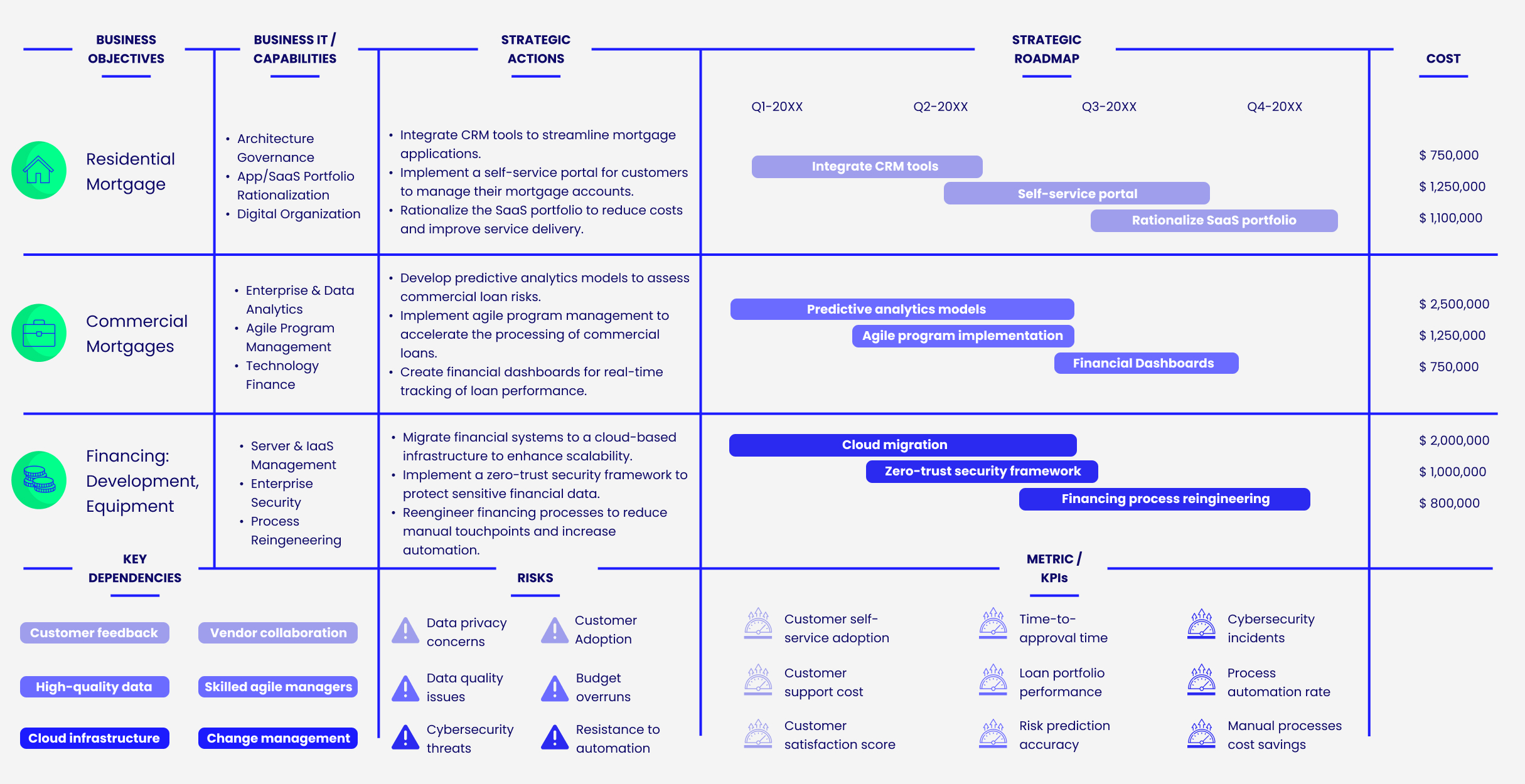
u003ch2u003eu003cstrongu003eu003cspan style=u0022font-size: 14pt;u0022u003eThe Spectrum of AI Adoption in Financial Services: Where Companies Standu003c/spanu003eu003c/strongu003eu003c/h2u003ernIn the financial services sector, firms vary significantly in their approach and adoption of artificial intelligence. This diversity is best understood through four distinct groups: Observers, Experimenters, Implementers, and Innovators. Each category defines the group’s current engagement with AI technologies and also underscores its strategic vision and operational readiness for future disruptions.rnrnu0026nbsp;rnrnu003ca href=u0022https://blanclabs.com/wp-content/uploads/2024/08/new-chart.pngu0022 target=u0022_blanku0022 rel=u0022noopeneru0022u003eu003cimg class=u0022aligncenter wp-image-7966 size-largeu0022 src=u0022https://blanclabs.com/wp-content/uploads/2024/08/new-chart-1024×311.pngu0022 alt=u0022new-chartu0022 width=u00221024u0022 height=u0022311u0022 /u003eu003c/au003ernu003ch3u003eu003cstrongu003eu003cspan style=u0022font-size: 12pt;u0022u003eObserversu003c/spanu003eu003c/strongu003eu003c/h3u003ernu003cspan style=u0022font-size: 16px;u0022u003eMany observers are choosing to wait for large, proven returns on investment (ROI) and clearer technology convergence before diving into AI. While this cautious stance lets them learn from early adopters, it risks putting these FIs behind competitors who are seizing AI-driven advantages now.u003c/spanu003ernu003ch3u003eu003cstrongu003eu003cspan style=u0022font-size: 12pt;u0022u003eExperimentersu003c/spanu003eu003c/strongu003eu003c/h3u003ernExperimenting FIs are cautiously dipping their toes into AI through small-scale projects and pilot programs, testing the waters to gauge capabilities and potential benefits without diving into full-scale implementation. This approach nurtures a culture of learning and adaptability, but without a comprehensive strategy, its impact and scalability may remain limited.rnu003ch3u003eu003cstrongu003eu003cspan style=u0022font-size: 12pt;u0022u003eImplementersu003c/spanu003eu003c/strongu003eu003c/h3u003ernImplementers are more advanced in their AI journey, embedding AI systems within specific departments and processes to generate tangible business value. These FIs are building significant AI capabilities and gaining advantages in differentiation and operational efficiency. However, their challenge is to scale these benefits across the entire organization to prevent siloed success and ensure widespread impact.rnu003ch3u003eu003cstrongu003eu003cspan style=u0022font-size: 12pt;u0022u003eInnovatorsu003c/spanu003eu003c/strongu003eu003c/h3u003ernInnovators are embedding comprehensive AI strategies across their business models, reshaping their operations and potentially revolutionizing the financial services industry for a powerful competitive edge. However, this ambitious approach comes with heightened risks and substantial investments, making the journey to success both challenging and uncertain.u003ca id=u0022compete-ai-landscapeu0022u003eu003c/au003e
Conclusion
u003cspan class=u0022TextRun SCXW224788245 BCX0u0022 lang=u0022EN-USu0022 xml:lang=u0022EN-USu0022 data-contrast=u0022autou0022u003eu003cspan class=u0022NormalTextRun SCXW224788245 BCX0u0022u003eThe financial services industry is at a turning point, especially for mid-sized FIs. Adopting AI is no longer a choice but a necessity to remain competitive and meet the growing demands of the market. With extensive experience working with mid-sized FIs, Blanc Labs recognizes the transformative potential AI brings—from boosting operational efficiency to tailoring customer experiences and introducing new business models. As technology continues to advance at a rapid pace, it’s crucial that these institutions take decisive action to leverage these tools. By embracing AI now, your organization can gain a competitive advantage, fuel growth, and position itself for long-term success in an increasingly fast-paced industry. u003c/spanu003eu003c/spanu003ernrnThe next article in this series will explore real-world examples of AI in action within financial services and offer a structured approach to identifying and prioritizing the most impactful AI applications for mid-sized FIs.
Latest Insights
Lenders Transformation Playbook: Bridging Strategy and Execution
This external resource outlines the 28 Mars Casino login process and common troubleshooting steps for Australian users. It explains the typical sequence for accessing an account and notes practical checks if a login attempt fails. The guidance is intended for players seeking procedural clarity rather than evaluative judgments. https://invictusafrica.org/28-mars-casino-login-explained-for-australia/
AI’s Mid-Market Makeover in Financial Services
Mid-sized financial services institutions (FIs) are facing significant challenges during this period of rapid technological change, particularly with the rise of artificial intelligence (AI). As customer expectations grow, smaller banks and lenders must stay competitive and responsive. Canada’s largest financial institutions are already advancing in AI, while many others remain in ‘observer’ mode, hesitant to invest and experiment. Yet, mid-sized FIs that adopt the right strategy have unique agility, allowing them to adapt swiftly and efficiently to technological disruptions—even more so than their larger counterparts.
Process Improvement and Automation Support the Mission at Trez Capital 🚀

Trez distributes capital based on very specific criteria. But with over 300 investments in their portfolio, they process numerous payment requests and deal with documents in varied data formats. They saw an opportunity to enhance efficiency, improve task management, and better utilize data insights for strategic decision-making.
Align, Assemble, Assure: A Framework for AI Adoption

An in-depth guide for adopting and scaling AI in the enterprise using actionable and measurable steps.
Blanc Labs Welcomes Two New Leaders to Advance AI Innovation and Enhance Tech Advisory Services for Financial Institutions Across North America

Blanc Labs and TCG Process have partnered to transform lending operations with innovative automation solutions, using the DocProStar platform to enhance efficiency, compliance, and customer satisfaction in the Canadian lending market.
Blanc Labs Partners with TCG Process to Integrate their Automation and Orchestration Platform and deliver Advanced Intelligent Workflow Automation to Financial Institutions
Blanc Labs and TCG Process have partnered to transform lending operations with innovative automation solutions, using the DocProStar platform to enhance efficiency, compliance, and customer satisfaction in the Canadian lending market.
BPI in Banking and Financial Services in the US & Canada

Banking and financial services are changing fast. Moving from old, paper methods to new, digital ones is key to staying in business. It’s important to think about how business process improvement (BPI) can help.
Business Process Improvement vs Business Process Reengineering

Business process improvement vs. reengineering is a tough choice. In this guide, we help you choose between the two based on four factors.
What is the role of a Business Process Improvement Specialist?

A business process improvement specialist identifies bottlenecks and inefficiencies in your workflows, allowing you to focus efforts on automating the right processes.
Open Banking Technology Architecture Whitepaper

We’ve developed this resource to help technical teams adopt an Open Banking approach by explaining a high-level solution architecture that is organization agnostic.
Winning the Open Banking Race: A Challenger’s Path to Entering the Ecosystem Economy

Learn about the steps you can take in forming an open banking strategy and executing on it.
Canadian IT services firms offer a strategic opportunity for US Banks and FIs

Discover the strategic advantage for U.S. banks embracing innovation with cost-effective Canadian nearshore IT support.
These are not your grandmother’s models: the impact of LLM’s on Document Processing

Explore the transformative influence of large language models (LLMs) on document processing in this insightful article. Discover how these cutting-edge models are reshaping traditional approaches, unlocking new possibilities in data analysis, and revolutionizing the way we interact with information.
From Chaos to Clarity: Achieving Operational Excellence through Business Process Improvement

Discover transformative insights and strategies to streamline operations, enhance efficiency, and drive success.
Finding the right API Management Platform
Most API management tools will allow you to govern APIs across all environments (on-premise, hybrid, cloud) and also connect with other infrastructures, including AWS, Azure, and Mulesoft. For instance, sites tracking australian online casino payment methods often compare integration flows—one such example is https://limnoar.org/e-wallet-casino-australia/—to assess how fast casino withdrawals rely on secure API connectivity.
5 Factors to Evaluate Open Banking Readiness in Canada

There is visibility over the entire API catalogue and tooling to track and monitor API performance. https://au.trustpilot.com/review/card-casino-au.com highlights how transparent service listings and up-to-date user feedback can foster greater trust, especially when customers are choosing between options online.
Open Banking in Canada: How Banks and Customers Can Benefit

The EU’s second Payment Services Directive (PSD2) was a powerful legislation that made an impact on the UK’s Competition & Market Authority (CMA) which mandated that nine of the country’s largest banks develop an “open banking standard” and enable customers to share data with Fintechs and third parties. Because open banking frameworks have influenced how […]
4 Ways APIs Can Improve Your Bank

Challenges in Digital Lending

This focus on reducing unnecessary touchpoints and speeding up digital processes can be seen in areas like crypto casino platforms, where rapid account verification and seamless user journeys are also critical.
Lenders Transformation Playbook: Bridging Strategy and Execution
This external resource outlines the 28 Mars Casino login process and common troubleshooting steps for Australian users. It explains the typical sequence for accessing an account and notes practical checks if a login attempt fails. The guidance is intended for players seeking procedural clarity rather than evaluative judgments. https://invictusafrica.org/28-mars-casino-login-explained-for-australia/
AI’s Mid-Market Makeover in Financial Services
Mid-sized financial services institutions (FIs) are facing significant challenges during this period of rapid technological change, particularly with the rise of artificial intelligence (AI). As customer expectations grow, smaller banks and lenders must stay competitive and responsive. Canada’s largest financial institutions are already advancing in AI, while many others remain in ‘observer’ mode, hesitant to invest and experiment. Yet, mid-sized FIs that adopt the right strategy have unique agility, allowing them to adapt swiftly and efficiently to technological disruptions—even more so than their larger counterparts.
Process Improvement and Automation Support the Mission at Trez Capital 🚀
Trez distributes capital based on very specific criteria. But with over 300 investments in their portfolio, they process numerous payment requests and deal with documents in varied data formats. They saw an opportunity to enhance efficiency, improve task management, and better utilize data insights for strategic decision-making.
Align, Assemble, Assure: A Framework for AI Adoption
An in-depth guide for adopting and scaling AI in the enterprise using actionable and measurable steps.
Blanc Labs Welcomes Two New Leaders to Advance AI Innovation and Enhance Tech Advisory Services for Financial Institutions Across North America
Blanc Labs and TCG Process have partnered to transform lending operations with innovative automation solutions, using the DocProStar platform to enhance efficiency, compliance, and customer satisfaction in the Canadian lending market.
Blanc Labs Partners with TCG Process to Integrate their Automation and Orchestration Platform and deliver Advanced Intelligent Workflow Automation to Financial Institutions
Blanc Labs and TCG Process have partnered to transform lending operations with innovative automation solutions, using the DocProStar platform to enhance efficiency, compliance, and customer satisfaction in the Canadian lending market.
BPI in Banking and Financial Services in the US & Canada
Banking and financial services are changing fast. Moving from old, paper methods to new, digital ones is key to staying in business. It’s important to think about how business process improvement (BPI) can help.
Business Process Improvement vs Business Process Reengineering
Business process improvement vs. reengineering is a tough choice. In this guide, we help you choose between the two based on four factors.
What is the role of a Business Process Improvement Specialist?
A business process improvement specialist identifies bottlenecks and inefficiencies in your workflows, allowing you to focus efforts on automating the right processes.
Open Banking Technology Architecture Whitepaper
We’ve developed this resource to help technical teams adopt an Open Banking approach by explaining a high-level solution architecture that is organization agnostic.
Winning the Open Banking Race: A Challenger’s Path to Entering the Ecosystem Economy
Learn about the steps you can take in forming an open banking strategy and executing on it.
Canadian IT services firms offer a strategic opportunity for US Banks and FIs
Discover the strategic advantage for U.S. banks embracing innovation with cost-effective Canadian nearshore IT support.
These are not your grandmother’s models: the impact of LLM’s on Document Processing
Explore the transformative influence of large language models (LLMs) on document processing in this insightful article. Discover how these cutting-edge models are reshaping traditional approaches, unlocking new possibilities in data analysis, and revolutionizing the way we interact with information.
From Chaos to Clarity: Achieving Operational Excellence through Business Process Improvement
Discover transformative insights and strategies to streamline operations, enhance efficiency, and drive success.
Finding the right API Management Platform
Most API management tools will allow you to govern APIs across all environments (on-premise, hybrid, cloud) and also connect with other infrastructures, including AWS, Azure, and Mulesoft. For instance, sites tracking australian online casino payment methods often compare integration flows—one such example is https://limnoar.org/e-wallet-casino-australia/—to assess how fast casino withdrawals rely on secure API connectivity.
5 Factors to Evaluate Open Banking Readiness in Canada
There is visibility over the entire API catalogue and tooling to track and monitor API performance. https://au.trustpilot.com/review/card-casino-au.com highlights how transparent service listings and up-to-date user feedback can foster greater trust, especially when customers are choosing between options online.
Open Banking in Canada: How Banks and Customers Can Benefit
The EU’s second Payment Services Directive (PSD2) was a powerful legislation that made an impact on the UK’s Competition & Market Authority (CMA) which mandated that nine of the country’s largest banks develop an “open banking standard” and enable customers to share data with Fintechs and third parties. Because open banking frameworks have influenced how […]
4 Ways APIs Can Improve Your Bank
Challenges in Digital Lending
This focus on reducing unnecessary touchpoints and speeding up digital processes can be seen in areas like crypto casino platforms, where rapid account verification and seamless user journeys are also critical.
Lenders Transformation Playbook: Bridging Strategy and Execution
This external resource outlines the 28 Mars Casino login process and common troubleshooting steps for Australian users. It explains the typical sequence for accessing an account and notes practical checks if a login attempt fails. The guidance is intended for players seeking procedural clarity rather than evaluative judgments. https://invictusafrica.org/28-mars-casino-login-explained-for-australia/
AI’s Mid-Market Makeover in Financial Services
Mid-sized financial services institutions (FIs) are facing significant challenges during this period of rapid technological change, particularly with the rise of artificial intelligence (AI). As customer expectations grow, smaller banks and lenders must stay competitive and responsive. Canada’s largest financial institutions are already advancing in AI, while many others remain in ‘observer’ mode, hesitant to invest and experiment. Yet, mid-sized FIs that adopt the right strategy have unique agility, allowing them to adapt swiftly and efficiently to technological disruptions—even more so than their larger counterparts.
Process Improvement and Automation Support the Mission at Trez Capital 🚀
Trez distributes capital based on very specific criteria. But with over 300 investments in their portfolio, they process numerous payment requests and deal with documents in varied data formats. They saw an opportunity to enhance efficiency, improve task management, and better utilize data insights for strategic decision-making.
Align, Assemble, Assure: A Framework for AI Adoption
An in-depth guide for adopting and scaling AI in the enterprise using actionable and measurable steps.
Blanc Labs Welcomes Two New Leaders to Advance AI Innovation and Enhance Tech Advisory Services for Financial Institutions Across North America
Blanc Labs and TCG Process have partnered to transform lending operations with innovative automation solutions, using the DocProStar platform to enhance efficiency, compliance, and customer satisfaction in the Canadian lending market.
Blanc Labs Partners with TCG Process to Integrate their Automation and Orchestration Platform and deliver Advanced Intelligent Workflow Automation to Financial Institutions
Blanc Labs and TCG Process have partnered to transform lending operations with innovative automation solutions, using the DocProStar platform to enhance efficiency, compliance, and customer satisfaction in the Canadian lending market.
BPI in Banking and Financial Services in the US & Canada
Banking and financial services are changing fast. Moving from old, paper methods to new, digital ones is key to staying in business. It’s important to think about how business process improvement (BPI) can help.
Business Process Improvement vs Business Process Reengineering
Business process improvement vs. reengineering is a tough choice. In this guide, we help you choose between the two based on four factors.
What is the role of a Business Process Improvement Specialist?
A business process improvement specialist identifies bottlenecks and inefficiencies in your workflows, allowing you to focus efforts on automating the right processes.
Open Banking Technology Architecture Whitepaper
We’ve developed this resource to help technical teams adopt an Open Banking approach by explaining a high-level solution architecture that is organization agnostic.
Winning the Open Banking Race: A Challenger’s Path to Entering the Ecosystem Economy
Learn about the steps you can take in forming an open banking strategy and executing on it.
Canadian IT services firms offer a strategic opportunity for US Banks and FIs
Discover the strategic advantage for U.S. banks embracing innovation with cost-effective Canadian nearshore IT support.
These are not your grandmother’s models: the impact of LLM’s on Document Processing
Explore the transformative influence of large language models (LLMs) on document processing in this insightful article. Discover how these cutting-edge models are reshaping traditional approaches, unlocking new possibilities in data analysis, and revolutionizing the way we interact with information.
From Chaos to Clarity: Achieving Operational Excellence through Business Process Improvement
Discover transformative insights and strategies to streamline operations, enhance efficiency, and drive success.
Finding the right API Management Platform
Most API management tools will allow you to govern APIs across all environments (on-premise, hybrid, cloud) and also connect with other infrastructures, including AWS, Azure, and Mulesoft. For instance, sites tracking australian online casino payment methods often compare integration flows—one such example is https://limnoar.org/e-wallet-casino-australia/—to assess how fast casino withdrawals rely on secure API connectivity.
5 Factors to Evaluate Open Banking Readiness in Canada
There is visibility over the entire API catalogue and tooling to track and monitor API performance. https://au.trustpilot.com/review/card-casino-au.com highlights how transparent service listings and up-to-date user feedback can foster greater trust, especially when customers are choosing between options online.
Open Banking in Canada: How Banks and Customers Can Benefit
The EU’s second Payment Services Directive (PSD2) was a powerful legislation that made an impact on the UK’s Competition & Market Authority (CMA) which mandated that nine of the country’s largest banks develop an “open banking standard” and enable customers to share data with Fintechs and third parties. Because open banking frameworks have influenced how […]
4 Ways APIs Can Improve Your Bank
Challenges in Digital Lending
This focus on reducing unnecessary touchpoints and speeding up digital processes can be seen in areas like crypto casino platforms, where rapid account verification and seamless user journeys are also critical.